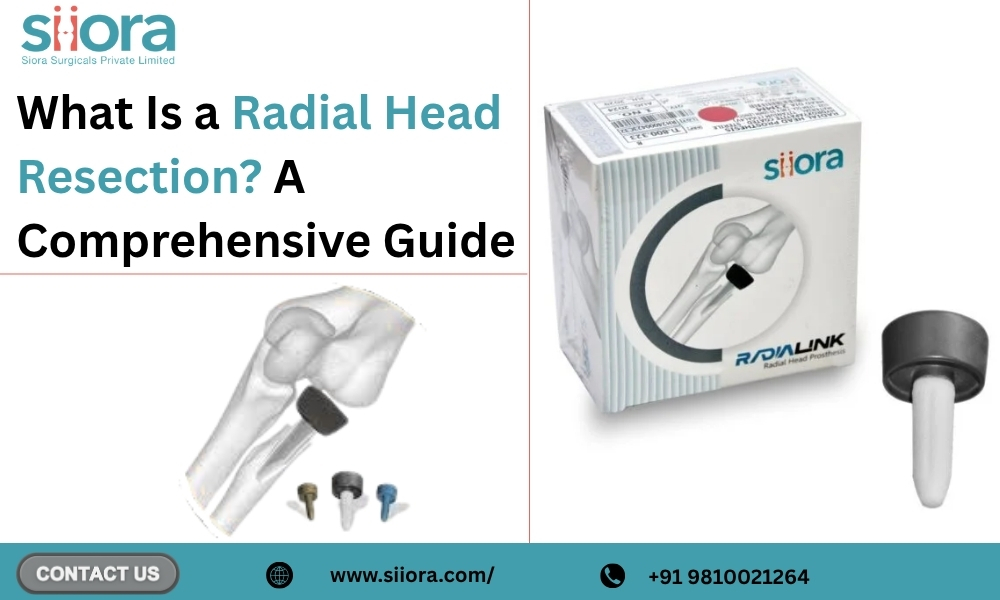
The human elbow is a complex joint, essential for countless daily activities, typing, lifting, driving, or even just reaching out for a handshake. One key component of this intricate mechanism is the radial head, a small but vital bone at the top of the radius (one of the two forearm bones). When injuries or chronic conditions severely damage this bone, doctors may recommend a procedure known as a radial head resection.
Understanding the Radial Head
To truly understand the idea of a radial head resection, let’s start with the basics. The radial head is the rounded top part of the radius bone, located on the outer side of your elbow. It fits into the elbow joint alongside the humerus (upper arm bone) and ulna (the other forearm bone), enabling smooth rotation and bending of the forearm. It plays a crucial role in movements such as turning your palm up or down (called pronation and supination).
When this bone is fractured beyond repair or deformed due to arthritis or repeated trauma, it can interfere with movement, cause chronic pain, or even destabilize the elbow. That’s when doctors might consider a radial head resection.
What Is a Radial Head Resection?
A radial head resection is a surgical procedure that involves removing the radial head either partially or entirely. It is most commonly performed when the bone is damaged beyond reconstruction due to a fracture, arthritis, or repetitive stress injuries.
Unlike joint replacements, a resection does not involve inserting an artificial implant (though sometimes a prosthesis may be used later if instability occurs). The procedure helps alleviate pain, restore motion, and reduce complications caused by the damaged bone fragment.
When Is It Recommended?
Doctors typically explore radial head resection when:
- The radial head is shattered into multiple fragments (comminuted fracture)
- There’s chronic arthritis affecting the joint
- Previous treatments like splints, therapy, or medication haven’t worked
- The radial head causes locking, stiffness, or pain with movement
In younger or more active individuals, surgeons may opt for reconstruction or radial head replacement instead, as resection can occasionally lead to long-term instability or loss of strength. However, in older adults or patients with lower physical demands, radial head resection is often effective.
The Procedure: What to Expect?
Radial head resection is usually performed under general or regional anesthesia. Here’s a general overview of how it’s done:
- Incision: A small cut is made near the elbow to access the radial head.
- Exposure: Soft tissues are gently moved aside to reach the damaged bone.
- Resection: The surgeon removes the affected part (or all) of the radial head using surgical tools.
- Closure: The area is cleaned, and the incision is closed with sutures.
The surgery typically takes about an hour, and most patients can go home the same day, depending on their condition.
Recovery and Rehabilitation
Post-surgery, the arm is usually placed in a splint or sling for a short period. Physical therapy is recommended soon after to regain strength and movement. Recovery time varies, but most people return to normal activities within 6 to 12 weeks.
During rehabilitation, focus is placed on gentle range-of-motion exercises, followed by strengthening exercises once healing progresses. It’s essential to follow your doctor’s advice closely to avoid complications like stiffness, nerve irritation, or instability.
Risks and Considerations
Like all surgeries, radial head resection carries some risks, including:
- Reduced forearm strength
- Limited range of motion
- Elbow instability (especially in younger or highly active individuals)
- Arthritis in the long term
However, with the right patient selection and postoperative care, outcomes are generally positive.
Final Thoughts
Radial head resection isn’t the first line of treatment for elbow injuries, but when carefully chosen, it can be a life-changing procedure. Whether you’re dealing with an old fracture or persistent elbow pain that hasn’t improved with other treatments, discussing your options with an orthopedic surgeon can offer clarity.
Learn about the advancements in the healthcare industry, including the orthopedic sector, at the Medical Fair in Thailand.
 siiora surgicals pvt. ltd